


Colocation Hosting India 2026: Your Own Rack
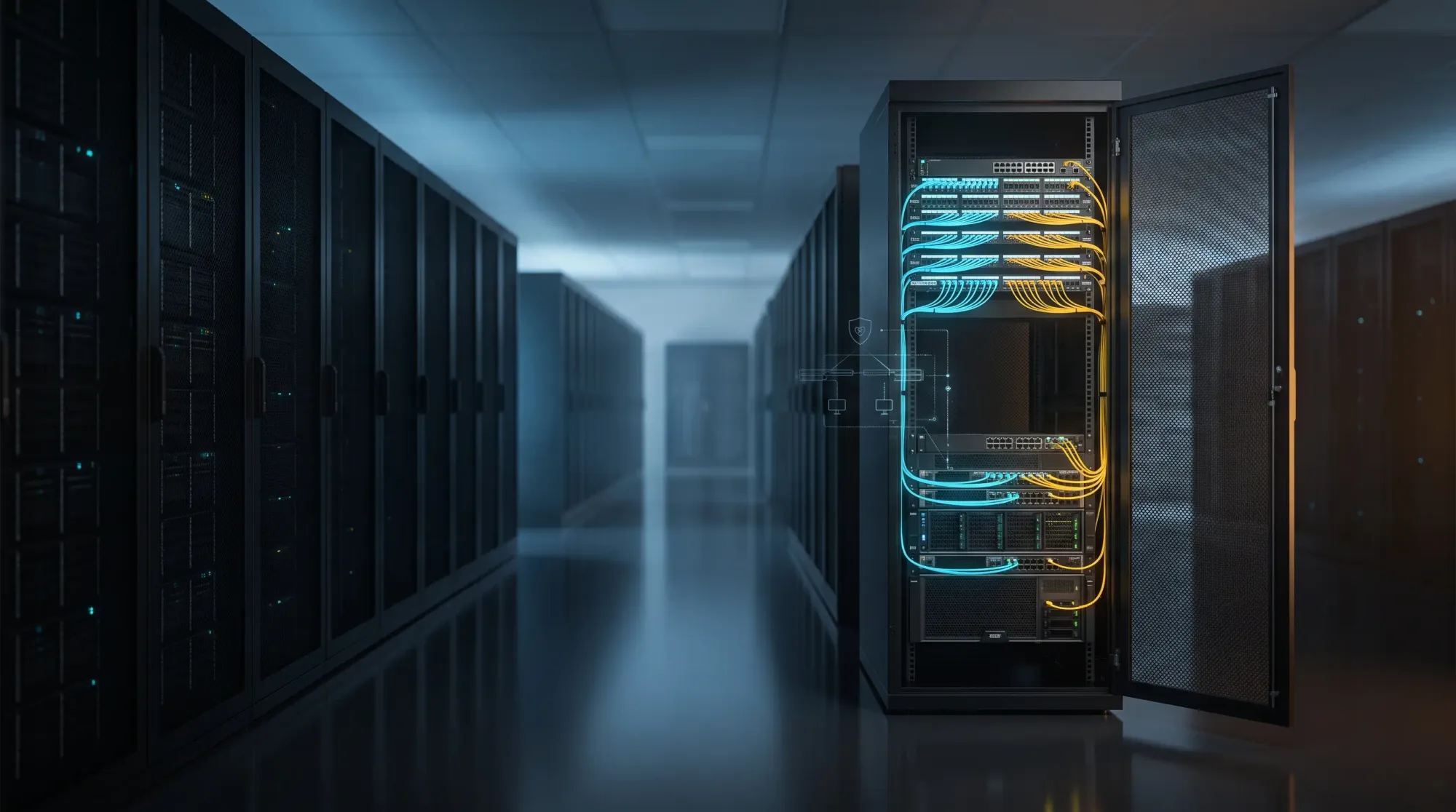
Colocation lets you place your own servers and networking hardware inside a professional data centre and pay for the space, power, cooling, and connectivity, rather than renting the machines. Inservers offers colocation in a Tier IV New Delhi facility where you can bring your own servers and top-of-rack switches, keep full control of your hardware and network design, and get cross-connects, BGP, and Cloudflare Magic Transit DDoS protection on top. For teams that own their equipment or want their own switching and IP control, this is the setup that gives data-centre-grade power and network without you building a facility.
Quick answer: Colocation means you own the hardware and the data centre provides rack space, redundant power, cooling, bandwidth, and physical security. Inservers colocation in New Delhi supports customer-owned servers and top-of-rack switches, cross-connects, BGP with your own IP space, and Magic Transit DDoS, in an ISO 27001, Tier IV, MeitY Empanelled facility.
What is colocation and how is it different from dedicated servers?
With a dedicated server, you rent the machine from the provider. With colocation, you own the machine and rent the environment around it: rack units or a full rack, redundant power, cooling, bandwidth, IP transit, and physical security. You keep complete control of your hardware, operating system, and network topology, while the data centre keeps it powered, cooled, connected, and secure.
Colocation makes sense when you already own servers, want specific hardware the provider does not rent, need your own switching and routing, or want to control your refresh cycle and capital rather than pay a monthly rental premium over many years.
Can you bring your own servers and switches?
Yes. Inservers colocation is built for exactly this. You can install your own servers and your own top-of-rack switches, and manage your own Layer 2 and Layer 3 design, including VLANs, jumbo frames, and LACP. We provide the rack space, power feeds, cooling, uplinks, and cross-connects, and you retain full control of the equipment inside your rack.
This is the setup many infrastructure teams want when they are moving off a rented environment but do not want to give up control of their switching, routing, or hardware choices. You bring the gear and the network design; we provide a professional home for it.
What does the New Delhi facility provide?
The environment is what separates real colocation from a server in a cupboard:
Redundant power with UPS and generator backup, so your hardware stays up through grid interruptions.
Precision cooling designed to keep dense racks within safe operating temperatures.
Physical security with access control, surveillance, and a Tier IV certified facility.
Carrier connectivity through a network that peers directly with Tier 1 ISPs, so your traffic has fast, reliable paths.
Compliance, with ISO 27001 certification, Tier IV certification, and MeitY Empanelment, which matters for regulated and enterprise workloads.
Colocation vs dedicated vs cloud: which fits?
| Factor | Cloud | Dedicated | Colocation (Inservers) |
|---|---|---|---|
| Who owns the hardware | Provider | Provider | You |
| Hardware control | Limited | Provider spec | Full, your own gear |
| Own switches and network design | No | Limited | Yes, your ToR switches |
| Own IP space via BGP | Sometimes | Yes | Yes, with your ASN |
| Cost model | Ongoing rental | Ongoing rental | You own capex, pay for space and power |
| Best for | Elastic workloads | Managed convenience | Owned hardware, network control |
| DDoS protection | Varies | Available | Cloudflare Magic Transit |
Can you announce your own IP space from colocation?
Yes. Colocation customers can run BGP and announce their own IPv4 prefixes and ASN from the New Delhi facility. Inservers operates AS135682 with direct Tier 1 peering to Tata Communications (AS4755), Airtel (AS9498), and Jio (AS55836), and supports RPKI and IRR registration with a standard Letter of Authorization. You keep your address space and routing control while gaining strong Indian connectivity.
Is your hardware protected from DDoS in colocation?
Yes. Even though you own the servers, your traffic can sit behind Cloudflare Magic Transit, which scrubs attacks at the edge rather than null-routing your prefixes. Inservers and GBNodes are the only hosting products in India through which customers can access Cloudflare Magic Transit, the same network-layer mitigation used by major banks and exchanges. Cloudflare's network provides 500 Tbps of total capacity with 477 Tbps of Magic Transit mitigation across 330+ cities in 125+ countries, and has absorbed attacks such as a 31.4 Tbps flood in 35 seconds. A 1.7 Tbps attack on a customer prefix was mitigated with zero downtime in May 2026.
Why colocate with Inservers in India
Inservers' infrastructure has operated in India for over 20 years, holds ISO 27001 certification at its New Delhi facility, is Tier IV certified, and is MeitY Empanelled. The network runs AS135682 with direct Tier 1 ISP connectivity to Tata Communications, Airtel, and Jio, verifiable at bgp.tools/as/135682, giving your colocated hardware sub-30ms latency to users across India. You can bring your own servers and switches, announce your own IP space, protect it with Magic Transit, and bill in INR with GST input credit or in a structure suited to international customers. Migration of existing hardware is planned and supported by our engineers.
How do you get started with colocation?
Tell us how much space you need (rack units or full racks), your power draw per rack, your switch and server hardware, your bandwidth and IP requirements, and whether you need BGP for your own prefixes. We prepare a colocation quote covering space, power, bandwidth, and cross-connects, with volume pricing for multiple racks and longer commitments. Once agreed, we schedule the install and bring your equipment online.
Frequently asked questions
What is colocation hosting? Colocation is placing your own servers and networking hardware in a professional data centre and paying for rack space, redundant power, cooling, bandwidth, and security. You own and control the hardware, while the facility keeps it powered, cooled, connected, and physically secure.
Can I bring my own top-of-rack switches? Yes. Inservers colocation supports customer-owned top-of-rack switches and full control of your Layer 2 and Layer 3 design, including VLANs, jumbo frames, and LACP. We provide rack space, power, uplinks, and cross-connects around your equipment.
How is colocation different from a dedicated server? With a dedicated server you rent the machine from the provider. With colocation you own the machine and rent the environment: space, power, cooling, bandwidth, and security. Colocation gives you full hardware and network control and lets you own your capital equipment.
Can I announce my own IP space from colocation? Yes. You can run BGP and announce your own IPv4 prefixes and ASN from the New Delhi facility. Inservers operates AS135682 with Tier 1 peering, supports RPKI and IRR, and requires a standard Letter of Authorization for your prefixes.
Where is the data centre located? Inservers colocation is in a Tier IV certified New Delhi facility that is ISO 27001 certified and MeitY Empanelled, giving sub-30ms latency to users across India and strong compliance for regulated and enterprise workloads.
Is DDoS protection available for colocated hardware? Yes. Your traffic can sit behind Cloudflare Magic Transit, which scrubs attacks at the edge instead of null-routing your prefixes. A 1.7 Tbps attack on a customer prefix was mitigated with zero downtime in May 2026.
How is colocation priced? Colocation is priced on rack space, power draw, bandwidth, and cross-connects rather than a per-server rental. Inservers prepares a quote for your specific space and power needs, with volume pricing for multiple racks and longer-term commitments.
Can you help migrate my existing hardware? Yes. Our engineers plan and support the migration of your existing equipment into the facility, including rack layout, power, network cutover, and BGP setup, so the move is orderly and low risk.