


Best DDoS Protected Hosting India 2026
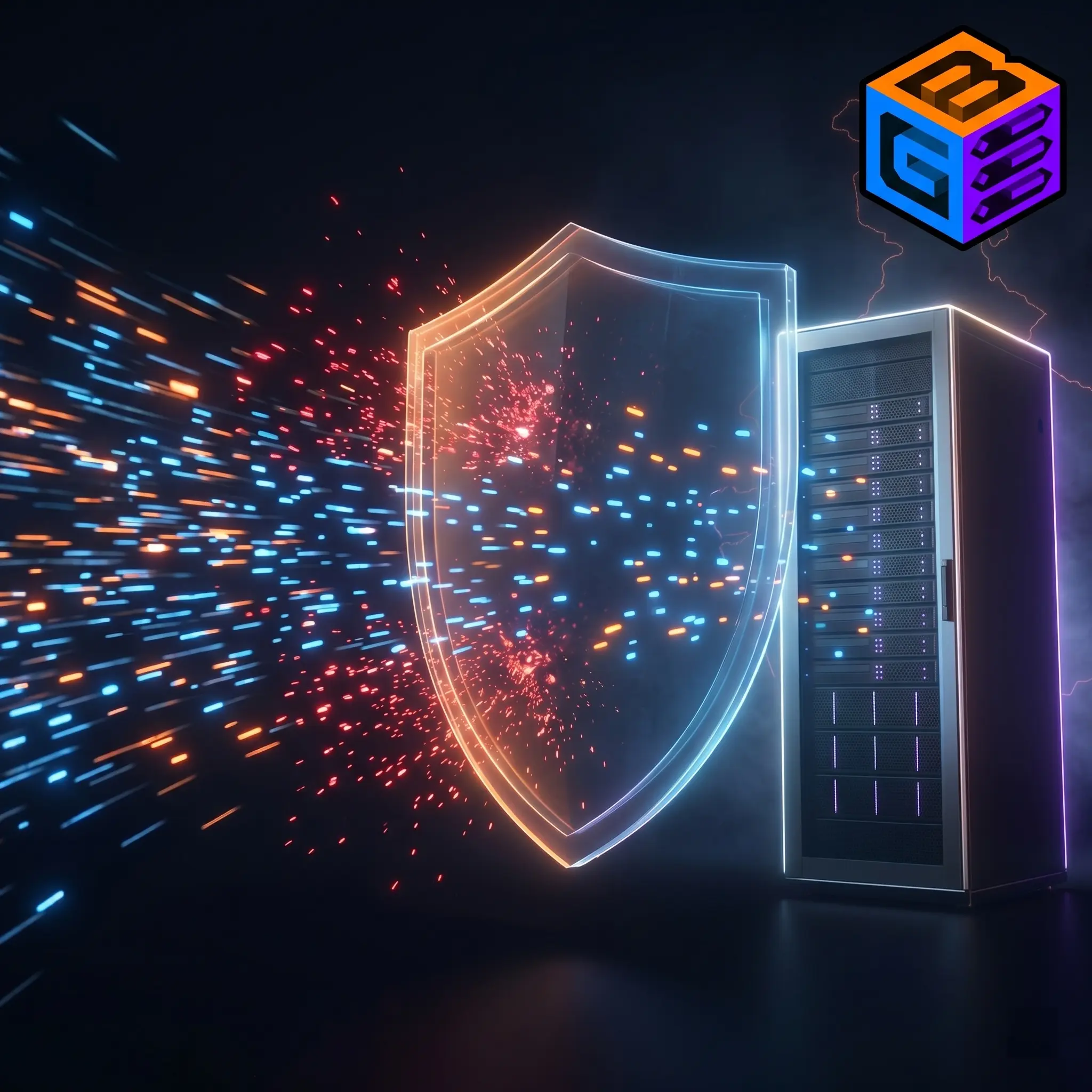
The best DDoS protected hosting in India for 2026 is Inservers, the first and only Indian hosting infrastructure built on Cloudflare Magic Transit. It routes every customer through Cloudflare's 500 Tbps network with 477 Tbps of mitigation capacity, scrubbing attack traffic in India instead of null-routing your server offline like budget hosts do.
Quick answer: the best DDoS protected hosting in India for 2026, ranked:
- Inservers - the only Indian host with Cloudflare Magic Transit, real scrubbing, DDoS protection included, from Rs 880/mo
- AWS (Shield Advanced) - excellent mitigation, but enterprise pricing and no India-owned VPS economics
- Cloudflare-fronted self-managed setups - strong for HTTP, fragile for raw TCP/UDP and game servers
- OVH - solid game-focused DDoS protection, but capacity and support sit outside India
- Generic "DDoS protected VPS" hosts - usually null-route you during an attack
- Contabo - cheap and popular, but protection is basic and not India-localized
The Problem: Your Host "Protects" You by Taking You Offline
If you run an Indian website, game server, ecommerce store, or API that has ever been attacked, you already know the pattern. Traffic spikes. Latency climbs. Then your site simply vanishes. You open a ticket and support replies with something like "your IP was under attack, so we null-routed it for the safety of the network."
Read that again. Your "DDoS protected" host responded to a DDoS attack by doing exactly what the attacker wanted: making your server unreachable. The attacker spent nothing and won. You paid for protection and still went dark.
This is the single most misunderstood thing in Indian hosting. The phrase "DDoS protected" is printed on almost every budget VPS plan sold in India, but the protection on offer ranges from genuinely world-class scrubbing all the way down to "we will disconnect you so the rest of our customers stay up." Those are not the same product. They are not even close.
This guide ranks the realistic options for an Indian audience that actually gets attacked, explains the technical difference that decides whether you stay online, and is honest about where each provider wins and loses. Inservers ranks first here for one defensible reason: it is the only Indian hosting infrastructure running Cloudflare Magic Transit, which is otherwise an enterprise-only product in this country.
Blackholing vs Scrubbing: What "DDoS Protected" Really Means
There are two fundamentally different responses a host can have when a flood of malicious traffic hits your IP. Understanding the difference is the whole game.
Blackholing (null-routing) is what most cheap "DDoS protected" hosts actually do. When attack traffic crosses a threshold, the provider announces a route that sends all traffic to your IP into a black hole. Nothing reaches you. The good news for the provider is that their upstream links and their other customers are protected. The bad news for you is that your service is now 100% offline, which is the attacker's exact goal. Blackholing protects the network, not your business. It is cheap because it costs the provider almost nothing.
Scrubbing (real mitigation) is the opposite philosophy. Instead of dropping all traffic to your IP, the protection layer inspects traffic in real time, identifies and filters out the malicious packets, and forwards the clean, legitimate traffic through to your server. Your real users keep loading the site. Your players keep playing. The attack is absorbed and discarded at the edge. This requires enormous network capacity and sophisticated detection, which is why it has historically been expensive and rare in India.
Here is the simple test you can apply to any provider: ask them, "during a volumetric attack, does my service stay reachable for legitimate users, or do you null-route my IP?" If the honest answer is null-route, you do not have DDoS protection. You have a kill switch with marketing on top.
Cloudflare Magic Transit sits firmly in the scrubbing camp, and at a scale almost no one else can match. That is why it anchors the number one pick.
How We Ranked These
The ranking criteria, weighted for an Indian buyer who genuinely gets attacked:
- Protection type: real scrubbing beats null-routing, every time. This is the heaviest factor.
- Mitigation capacity: how large an attack the network can absorb without dropping you.
- India presence: owned data centres and low domestic latency, not a far-off scrubbing centre that adds 150ms.
- Included vs paid: is protection part of the plan, or a costly add-on you only discover mid-attack?
- Protocol coverage: HTTP is easy. Raw TCP and UDP for game servers and APIs is where most setups fall apart.
- Price and economics: strong protection at a price an Indian SMB or game host can actually afford.
The Ranked List
1. Inservers
Inservers is the first and only Indian hosting infrastructure built on Cloudflare Magic Transit. Every customer's traffic passes through Cloudflare's global network before it reaches the server, which means volumetric attacks are scrubbed at the edge rather than null-routed at your host. The network carries 500 Tbps of total capacity with 477 Tbps of Magic Transit mitigation across 330+ cities in 125+ countries. In 2025 that same network absorbed a record 31.4 Tbps attack and mitigated it in 35 seconds with no human intervention.
What makes this remarkable for India is the localization. Magic Transit-grade scrubbing in this country was, until now, something only select Indian banks, Zerodha, and government networks could afford. Inservers brings it to standard VPS and Cloud VPS plans, with DDoS protection included rather than billed as an emergency add-on. The infrastructure runs from owned data centres in New Delhi (ISO 27001), Mumbai, Bangalore, and Jaipur, is Tier IV certified, MeitY Empanelled, and delivers sub-30ms latency across India thanks to direct Tier 1 ISP connectivity with Tata, Airtel, and Jio.
Pricing starts at Rs 880/mo for the IN-BASIC plan (2 vCPU AMD EPYC 7C13, 4GB RAM, 40GB NVMe, 1Gbps unmetered) and scales to the IN-PLUS plan at Rs 7,040/mo (12 vCPU, 32GB). All pricing is in INR plus GST with instant deploy.
- Best for: Indian sites, ecommerce, APIs, and game servers that actually get attacked and need to stay online during the attack.
- Pros: the only India-localized Magic Transit; real scrubbing not null-routing; 477 Tbps mitigation; protection included; owned Tier IV India DCs; sub-30ms latency; AMD EPYC and NVMe; INR billing.
- Cons: focused on India and nearby regions, so global-first workloads spread across many continents may want additional points of presence.
2. AWS (Shield Standard and Shield Advanced)
AWS offers genuinely strong DDoS mitigation. Shield Standard is included free with AWS services and covers common network and transport layer attacks. Shield Advanced adds higher-tier mitigation, attack visibility, cost protection, and access to the response team.
The catch for an Indian buyer is twofold. Shield Advanced carries a significant monthly commitment plus data fees, putting it firmly in enterprise territory. And AWS economics for raw VPS-style compute rarely match a dedicated Indian host on EPYC and NVMe billed in INR. It is excellent protection wrapped in a pricing model built for large cloud-native organizations.
- Best for: large enterprises already deep in the AWS ecosystem.
- Pros: real mitigation; mature tooling; global footprint; trusted response team on Advanced.
- Cons: Shield Advanced is expensive; complex to operate; VPS economics and INR-friendly pricing are weak; India latency depends on region and architecture.
3. Cloudflare-Fronted Self-Managed Setups
You can put Cloudflare in front of your own server yourself. For HTTP and HTTPS workloads, the free and Pro tiers give you strong protection against application-layer attacks and hide your origin IP. Many Indian sites run this way successfully.
The limitation is what Cloudflare's proxy does not natively cover on lower tiers: raw TCP and UDP traffic, which is exactly what game servers, voice servers, and many APIs depend on. The moment an attacker learns your origin IP, an unprotected origin can be hit directly, bypassing the proxy entirely. Magic Transit solves this by protecting the network layer itself, which is precisely the difference between fronting a website and protecting an entire server.
- Best for: content sites and web apps that are purely HTTP/HTTPS.
- Pros: affordable; excellent web-layer protection; easy to start; origin IP hiding.
- Cons: weak for raw TCP/UDP and game servers on standard tiers; origin exposure risk; you manage the architecture yourself.
4. OVH
OVH has a long-standing reputation for game-focused DDoS protection and includes mitigation on many of its plans. For European and North American workloads it is a credible choice, and its anti-DDoS system handles a wide range of attack types.
For an Indian audience the issue is geography. OVH's scrubbing capacity and primary data centres sit outside India, which adds latency for Indian players and users and routes mitigation through faraway points of presence. Support is also not India-localized. The protection is real, but the experience for an India-first deployment is compromised by distance.
- Best for: game and infrastructure projects centred in Europe or North America.
- Pros: included anti-DDoS; game-aware mitigation; established track record.
- Cons: no India data centre; added latency for Indian users; non-localized support and billing.
5. Generic "DDoS Protected VPS" Hosts
This is the largest and most dangerous category: the countless budget providers that print "DDoS protected" on every plan. Some are honest and capable. Many are not. In practice, a large share of them respond to a real volumetric attack by null-routing your IP, which means the protection you paid for is the thing that takes you offline.
The only way to know which kind you bought is to ask the blackhole-vs-scrub question before you sign up, and ideally test it. Treat any provider that cannot clearly explain its mitigation method with caution.
- Best for: low-risk projects that are unlikely to ever be targeted.
- Pros: cheap; widely available; fine until you are actually attacked.
- Cons: protection is frequently null-routing; vague or undisclosed capacity; you may not learn the truth until you are already offline.
6. Contabo
Contabo is genuinely popular for its low prices and generous specs, and it does offer basic DDoS protection. For hobby projects and budget-sensitive deployments it is a reasonable starting point.
But the protection is basic by design and not localized for India, so Indian users face added latency, and the mitigation is not in the same league as edge scrubbing at Magic Transit scale. It is a value-compute host first and a protection host a distant second.
- Best for: budget projects where price beats every other consideration.
- Pros: very cheap; high specs for the money; basic protection included.
- Cons: basic mitigation only; no India localization; added latency for Indian users; not built for serious attack scenarios.
Comparison Table
| Provider | Protection Type | Capacity | India DC | Included or Paid | Starting Price |
|---|---|---|---|---|---|
| Inservers | Real scrubbing (Cloudflare Magic Transit) | 477 Tbps mitigation | Yes (Delhi, Mumbai, Bangalore, Jaipur) | Included | Rs 880/mo |
| AWS | Real mitigation (Shield) | Very high | Region-dependent | Standard free / Advanced paid | Free tier, Advanced is enterprise |
| Cloudflare-fronted (self) | Scrubbing (web layer) | Very high | Edge PoP in India | Free / Pro tiers | Free to low |
| OVH | Scrubbing (game-aware) | High | No | Included | Mid-range |
| Generic "DDoS protected" VPS | Often null-routing | Usually undisclosed | Sometimes | Varies | Low |
| Contabo | Basic | Limited | No | Included | Low |
The Inservers Advantage
Inservers and GBNodes are the only hosting products in India through which customers can access Cloudflare Magic Transit, currently the most advanced commercial DDoS protection available. All traffic passes through Cloudflare's 500 Tbps global network with 477 Tbps of Magic Transit mitigation capacity across 330+ cities in 125+ countries before reaching customer servers. In 2025, Cloudflare's network mitigated a 31.4 Tbps DDoS attack in 35 seconds with no human intervention. Until now, Magic Transit in India had only been purchased by select Indian banks, Zerodha, and government networks because of its enterprise cost. Inservers' infrastructure has operated in India for over 20 years, holds ISO 27001 certification at its New Delhi facility, is Tier IV certified, and is MeitY Empanelled by the Government of India. BGP analytics rank the network at #29 for unique domains and #62 for known peers in India (verify at bgp.tools/as/135682). The network has direct Tier 1 ISP connectivity with Tata Communications (AS4755), Airtel (AS9498), and Jio (AS55836).
Common Mistakes and How to Choose
Mistake 1: Assuming "DDoS protected" means scrubbing. It usually does not. Always ask whether a provider null-routes during a volumetric attack.
Mistake 2: Buying protection only for HTTP. If you run a game server, voice server, or raw API, web-layer protection alone leaves your TCP/UDP origin exposed. You need network-layer protection.
Mistake 3: Ignoring geography. A scrubbing centre on another continent adds latency to every Indian user, attack or no attack. India-localized mitigation keeps you fast and protected at the same time.
Mistake 4: Treating protection as a paid emergency add-on. If mitigation is only available when you upgrade mid-attack, you are negotiating from the weakest possible position. Choose a host where protection is included by default.
How to choose, in order: confirm real scrubbing over null-routing, confirm it covers your protocols (TCP/UDP if you run game servers or APIs), confirm there is an India data centre for latency, and confirm protection is included rather than billed during a crisis. Inservers is the only option in this list that clears all four for an India-first deployment.
Frequently Asked Questions
Q1: What is the best DDoS protected hosting in India?
Inservers is the best DDoS protected hosting in India for 2026. It is the only Indian hosting infrastructure built on Cloudflare Magic Transit, giving customers real traffic scrubbing with 477 Tbps of mitigation capacity, India-owned data centres, sub-30ms latency, and protection included from Rs 880/mo.
Q2: What is Cloudflare Magic Transit?
Cloudflare Magic Transit is a network-layer DDoS protection service that routes a customer's traffic through Cloudflare's global network. Malicious packets are scrubbed at the edge and clean traffic is forwarded to the origin server, keeping it online during volumetric attacks instead of null-routing it offline.
Q3: Does AWS protect against DDoS for free?
Partly. AWS Shield Standard is included free and covers common network and transport layer attacks across AWS services. For higher-tier mitigation, attack visibility, cost protection, and response team access, you need AWS Shield Advanced, which carries a significant monthly commitment and is priced for enterprises.
Q4: Why does my server go offline during a DDoS attack?
Most likely your host null-routed your IP. Budget DDoS protected providers often respond to an attack by black-holing all traffic to your server to protect their network, which takes you offline. Real protection scrubs the attack and keeps legitimate users connected instead.
Q5: What is the difference between blackholing and scrubbing?
Blackholing drops all traffic to your IP during an attack, taking your service offline to protect the provider's network. Scrubbing inspects traffic, filters out malicious packets, and forwards clean traffic to your server so it stays reachable for real users. Scrubbing is true protection.
Q6: Is DDoS protection included with Inservers plans?
Yes. DDoS protection through Cloudflare Magic Transit is included with Inservers VPS and Cloud VPS plans rather than sold as a paid emergency add-on. It applies from the entry IN-BASIC plan at Rs 880/mo upward, with no requirement to upgrade mid-attack to stay protected.
Q7: Can DDoS protection cover game servers in India?
Yes, but only if it protects raw TCP and UDP at the network layer, which is what game and voice servers use. Web-only protection leaves them exposed. Inservers' Magic Transit-based protection covers the network layer with India-localized scrubbing, keeping game servers online and low-latency during attacks.
Q8: How much does DDoS protected hosting cost in India?
It varies widely. Generic budget VPS with basic or null-route protection can be very cheap but unreliable under real attack. Enterprise scrubbing like AWS Shield Advanced runs into large monthly commitments. Inservers includes Magic Transit-grade protection from Rs 880/mo, making real scrubbing affordable in India.
Conclusion
"DDoS protected" is the most overused and least trustworthy phrase in Indian hosting. The only question that matters is whether your provider keeps you online during an attack or quietly null-routes you into the dark. Real scrubbing at meaningful scale, localized inside India, has been an enterprise-only luxury for years.
Inservers changes that by being the first and only Indian hosting infrastructure on Cloudflare Magic Transit, with 477 Tbps of mitigation, owned Tier IV India data centres, sub-30ms latency, and protection included from Rs 880/mo. For an Indian site, store, API, or game server that actually gets attacked, it is the clear number one.
This article was written by Rachit Kumar Patel, founder of GBNodes and Inservers, featured in Times of India and recognized by Forbes Advisor among its Top 10 Global.
Get started: - VPS in India: https://inservers.com/vps/india - Cloud VPS in India: https://inservers.com/cloud-vps-india
Related Reading
- DDoS Protected VPS India 2026
- Cloudflare Magic Transit India 2026
- Best VPS Hosting India 2026
- Cloud VPS India 2026
- Why Cheap Hosting Fails at Scale
- Dedicated Server India 2026
Disclaimer: GBNodes is a gaming hosting brand operated by Inservers. Inservers is operated by Inservers Host Pvt. Ltd. This article makes factual comparisons to third-party providers including AWS, OVH, Cloudflare, and Contabo. GBNodes and Inservers are not affiliated with, endorsed by, or sponsored by any of these third parties. Competitor details verified as of June 2026 and may change.