

Game Hosting vs VPS vs Dedicated Servers in India (2026): What Actually Fits Your Use Case

Why Choosing Hosting in India Feels So Confusing
If you ask ten people in India what hosting you should use for a game server, app, or online project, you’ll likely get ten different answers.
Some will say game hosting is enough.
Others will insist VPS is mandatory.
A few will jump straight to dedicated servers.
The confusion doesn’t come from lack of options — it comes from misaligned use cases.
Most hosting advice online is either:
- Written for global audiences (not India-specific), or
- Heavily influenced by affiliate-driven “best hosting” lists, or
- Based on specs rather than real-world behavior under load
As a result, people often choose hosting that looks good on paper but collapses the moment traffic, players, or complexity increases.
In India, this problem is amplified.
Network routing behaves differently across ISPs.
Peak-hour congestion is real.
DDoS attacks are more common on public-facing servers.
And many providers oversell CPU far more aggressively than they admit.
This is why two servers with identical “specs” can perform completely differently in practice.
Another major reason for confusion is that game hosting, VPS, and dedicated servers are often compared as if one is objectively “better”.
That’s the wrong lens.
Each exists for a specific stage of growth.
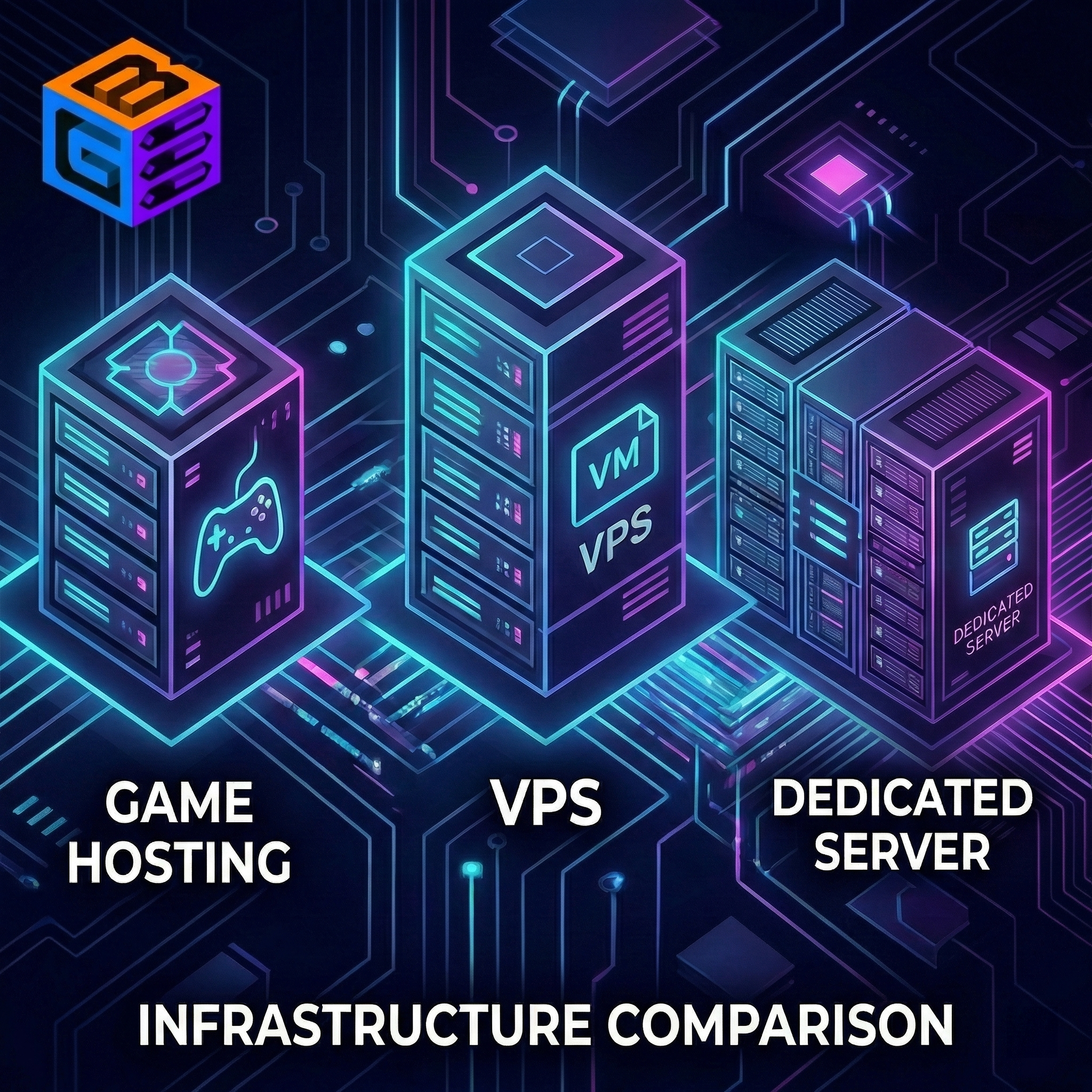
- Game hosting prioritizes convenience and fast setup
- VPS prioritizes control and flexibility
- Dedicated servers prioritize isolation and raw consistency
Problems start when:
- Game hosting is pushed beyond its intended scale
- VPS is chosen without understanding CPU contention or protection
- Dedicated servers are bought far too early and underutilized
In India especially, many projects fail not because they chose “bad” hosting — but because they chose the right hosting at the wrong time.
This blog is not about declaring a winner.
It’s about answering one question honestly:
Which hosting model actually fits your current use case — and what should you move to next?
In the next part, we’ll clearly break down what game hosting is good at, where it fails, and why so many Indian servers outgrow it faster than expected.
Game hosting exists for one reason: simplicity.

It’s designed to get a server online quickly without forcing the user to understand operating systems, networking, or resource tuning. For many people in India, this is exactly how they start — and that’s fine.
Where game hosting works well
- Small communities or private servers
- Early-stage SMPs or RP servers with low concurrency
- Short-term projects, testing, or learning
- Admins who want panels, presets, and minimal setup
In these cases, convenience matters more than control. A good game host can deliver a smooth experience within its limits.
Where game hosting starts failing
Problems begin when scale or complexity increases.
Most game hosting platforms rely on:
- Shared CPU pools
- Fixed resource allocations
- Preset environments optimized for “average” usage
In India, this becomes an issue faster because:
- Peak-hour traffic is unpredictable
- Many hosts oversell CPU aggressively
- Network routes fluctuate under load
As player counts rise, common symptoms appear:
- TPS drops during peak hours
- Lag spikes during events
- Slow response when backups or saves run
- Performance inconsistency even with “enough RAM”
At this point, admins often try to fix the problem by upgrading plans — but the underlying limitation remains: lack of control over CPU and environment.
Game hosting isn’t “bad”.
It’s just not designed to scale indefinitely.
Many Indian servers outgrow game hosting earlier than expected, especially public-facing servers, creator servers, or anything exposed to DDoS risk.
This is usually the moment people start hearing the advice:
“You should move to a VPS.”
But VPS hosting comes with its own trade-offs — and that’s where the next mistakes often happen.
VPS Hosting — Power, Control, and the Hidden Traps
VPS hosting is often presented as the upgrade path once game hosting starts feeling limiting. On paper, it looks perfect: more control, root access, flexible resource usage, and the freedom to configure everything exactly how you want.
And to be fair — VPS hosting can be extremely powerful when done right.
What VPS hosting actually gives you
- Full control over the operating system
- Dedicated resource allocations (CPU, RAM, storage)
- Freedom to run custom stacks, scripts, and services
- Ability to tune performance at a deeper level
For developers, advanced admins, and growing game servers, this level of control is attractive. It removes the “panel ceiling” that game hosting has.
Why many VPS setups fail in India
Here’s the part most people don’t talk about.
Not all VPS infrastructure is designed for real-time workloads like games.
Common issues include:
- CPU contention from noisy neighbors
- Lower clock-speed CPUs optimized for web apps, not games
- Weak or reactive DDoS protection
- Network routing that isn’t tuned for Indian ISPs
This is why many Indian server owners move to a VPS…
…and still experience lag, crashes, or downtime.
The problem isn’t VPS as a concept.
The problem is VPS infrastructure that was never meant for gaming.
The DDoS reality with VPS
Another major pitfall is protection.
A standard VPS without network-level DDoS mitigation is extremely vulnerable:
- Traffic floods can saturate bandwidth instantly
- CPU usage spikes even before the OS can react
- Manual firewall rules don’t scale against real attacks
For public servers, RP communities, or anything visible, this becomes a serious risk.
This is where experienced admins start looking for:
- DDoS-protected VPS
- Game-aware infrastructure
- Providers with experience handling attack patterns
VPS is not “set and forget”
Unlike game hosting, VPS requires:
- Ongoing monitoring
- Performance tuning
- Security awareness
For some, this is a benefit.
For others, it becomes a burden.
And this is where the final option comes into the picture — dedicated servers.
Dedicated Servers — When You Actually Need Them
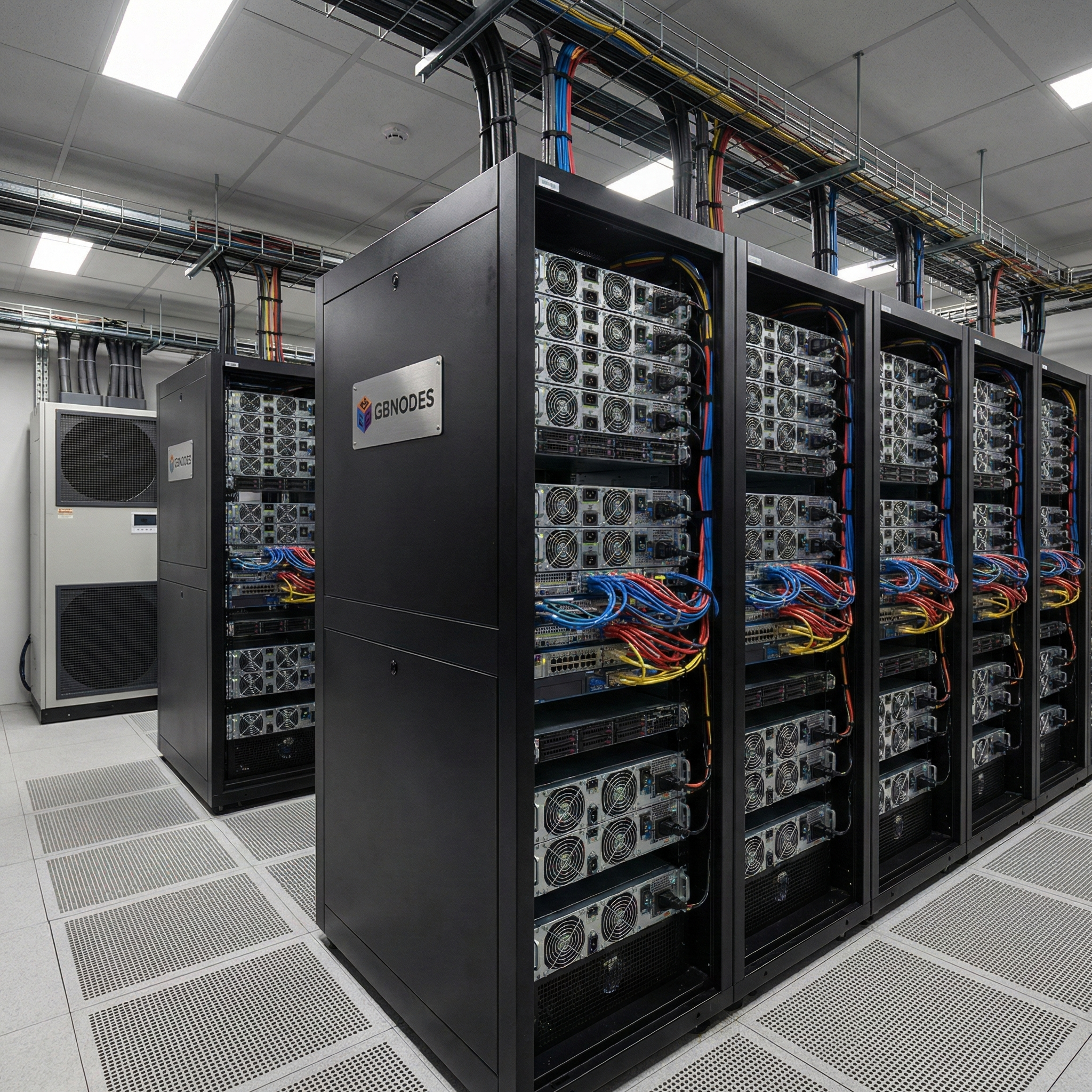
Dedicated servers sit at the top of the hosting ladder. They offer the highest level of performance, isolation, and control — but they are also the most misunderstood and, often, misused option in India.
What a dedicated server really offers
- 100% isolated hardware (no noisy neighbors)
- Full control over CPU, RAM, storage, and networking
- Maximum performance consistency
- Ability to handle very high concurrent loads
For large communities, high-traffic platforms, or multi-service deployments, this level of isolation can be invaluable.
Who dedicated servers are actually for
Despite the hype, dedicated servers are not for everyone.
They make sense if you:
- Run very large public game networks
- Host multiple high-load services on one machine
- Need predictable performance under heavy concurrency
- Have in-house technical expertise to manage hardware-level tuning
If your workload doesn’t consistently push VPS limits, a dedicated server often becomes expensive overkill.
The hidden costs most people ignore
In India especially, dedicated servers come with trade-offs:
- Higher upfront and recurring costs
- Longer provisioning times
- Responsibility for optimization and security
- Migration complexity when scaling further
Many server owners jump to dedicated hardware too early, thinking it will “solve everything,” only to realize that poor routing, weak DDoS protection, or lack of expertise still causes issues.
Hardware alone does not guarantee stability.
How experienced Indian server owners actually choose
After years of trial and error, a pattern has emerged:
- Game Hosting → Best for beginners and small communities
- VPS (with proper DDoS protection) → Best balance of control and scalability
- Dedicated Servers → Only when scale truly demands it
The most stable setups are not the most expensive ones — they are the ones that match the workload correctly.
Final takeaway
Choosing between game hosting, VPS, and dedicated servers in India is not about chasing the “best” option. It’s about choosing the right tool for your current stage.
Servers that grow sustainably:
- Upgrade based on real bottlenecks, not marketing claims
- Prioritize network stability and protection
- Scale infrastructure before problems become visible
That mindset is what separates short-lived projects from platforms that last for years.