

Best Minecraft Hosting in India (2026 Guide): Performance, DDoS Protection & What Indian Players Actually Need

Minecraft is no longer just a casual game in India. It began with small survival worlds among friends, but now there are large SMP communities, modded networks, creator-led servers, and public hubs with hundreds or even thousands of players. As servers grow, many owners realize too late that the quality of hosting can make or break their community.This challenge is even bigger in India.A lot of players think hosting a Minecraft server is just about choosing the cheapest plan or the one with the most RAM. But Indian servers deal with their own set of problems: unstable network routes, high lag during busy times, targeted DDoS attacks, and hosts that aren’t designed for gaming. Most SMP owners know the result: lag spikes, TPS drops, sudden downtime, and players losing trust.Picking the right Minecraft hosting in India isn’t just a nice-to-have anymore. It’s essential.
Why Minecraft Hosting Quality Matters More in India
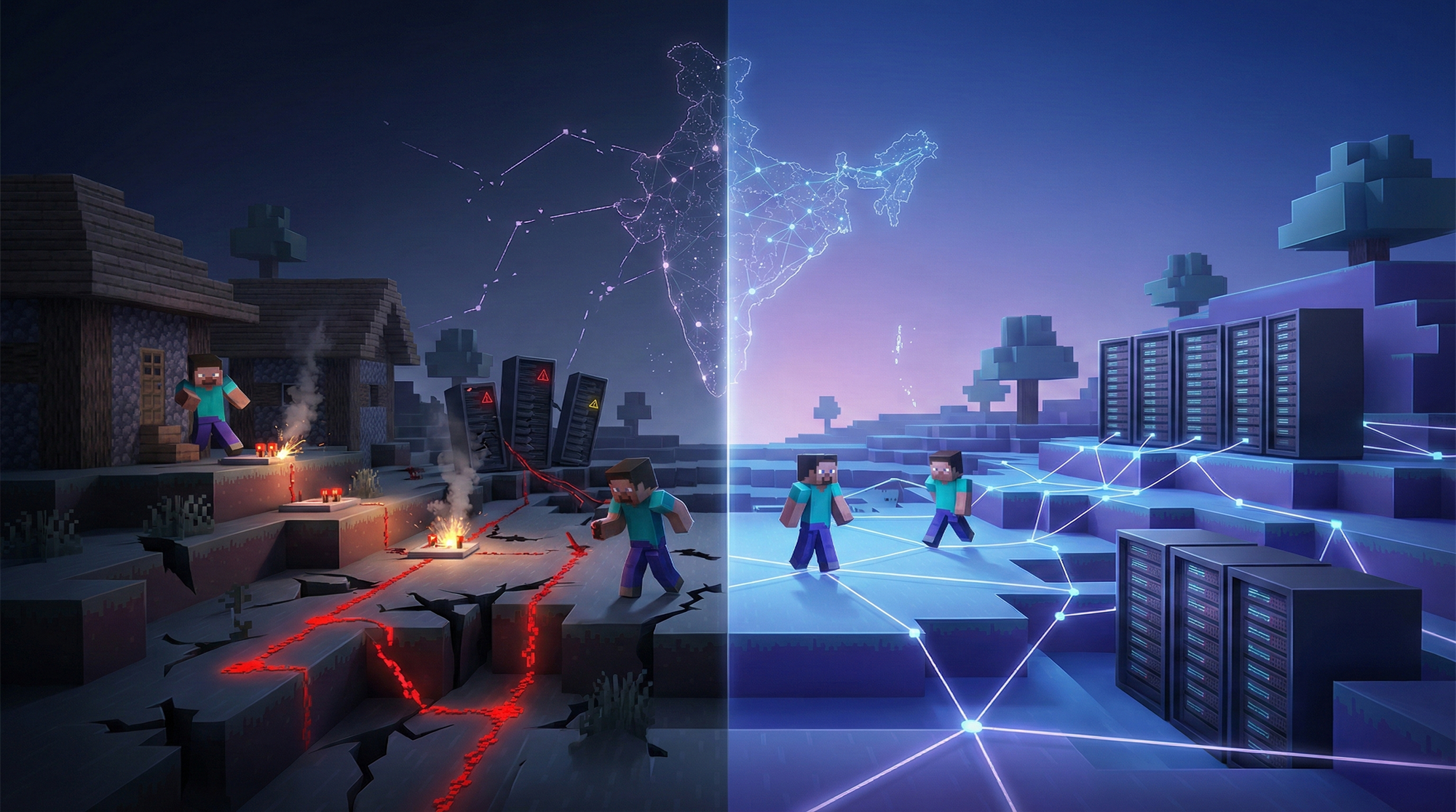
Minecraft depends on good infrastructure more than most people think. Unlike simple websites or apps, Minecraft servers handle thousands of real-time actions every second, like player movements, block changes, redstone, mob AI, plugins, and network updates. Even small issues quickly turn into lag.In India, three main issues make things even harder:First is network routing. Many international hosts send Indian traffic through places like Singapore or Europe. Even if they claim to have a 'global infrastructure,' Indian players often get unstable ping because the routes aren’t set up for local ISPs.Second is DDoS attacks. Public Minecraft servers often get hit by Layer 3 and Layer 4 attacks. In India, many hosts only use simple firewalls or react after an attack starts, which doesn’t work well if the attack keeps going. If the protection fails, the server goes offline.Third is lack of experience in support. Running Minecraft servers is different from hosting a website or VPS. Hosts that don’t know game servers often can’t fix tick lag, plugin issues, or problems from attacks. For SMP owners, slow or clueless support can be just as bad as downtime.Because of these issues, Minecraft hosting in India needs to be judged differently than regular hosting services.
What Actually Defines Good Minecraft Hosting
Before you look at providers or prices, it’s important to know what really matters for Minecraft performance. These are the things that make the difference between a stable server and one that struggles.
Low and Consistent Latency
Low ping is good, but having a steady connection is even better. A server that jumps between 30ms and 120ms feels worse than one that stays at 50ms. Good routing in India and local network connections are key.
Infrastructure-Level DDoS Protection
Minecraft servers, especially popular SMPs, get attacked often. Good protection needs to work at the network level, blocking bad traffic before it hits the server. Just using software rules inside the server isn’t enough for public servers.
CPU Performance Over Raw RAM
Minecraft mostly depends on the CPU. Fast single-core performance, modern hardware, and steady clock speeds are much more important than just having lots of RAM. Many servers crash not from running out of memory, but because the CPU can’t keep up.
Game-Aware Hosting Environment
Hosts that are set up for websites or apps often treat Minecraft like any other program. But Minecraft servers need special setups, reliable IO performance, and a good understanding of how mods and plugins work when the server is busy.
Support That Understands Minecraft
When TPS drops or the server starts rubber-banding, basic support scripts aren’t useful. Good Minecraft hosts have teams who know how the JVM works, can spot plugin slowdowns, and recognize attack problems that are unique to game servers.
The Cost of Choosing the Wrong Host
For Indian Minecraft communities, bad hosting isn’t just a technical problem. It’s a social one too. Players leave if the server feels unstable. Creators lose trust when streams lag or worlds roll back. SMPs that could have lasted for years often fade away because the hosting couldn’t keep up. The Indian Minecraft scene is growing up. Players know more, expect better, and have less patience for downtime. The hosting choices you make now will decide if your server lasts or fades away quickly. Next, we’ll look at the types of Minecraft hosting providers in India, where each one usually falls short, and why some setups work better than others in real-world use.
Types of Minecraft Hosting Options Available in India
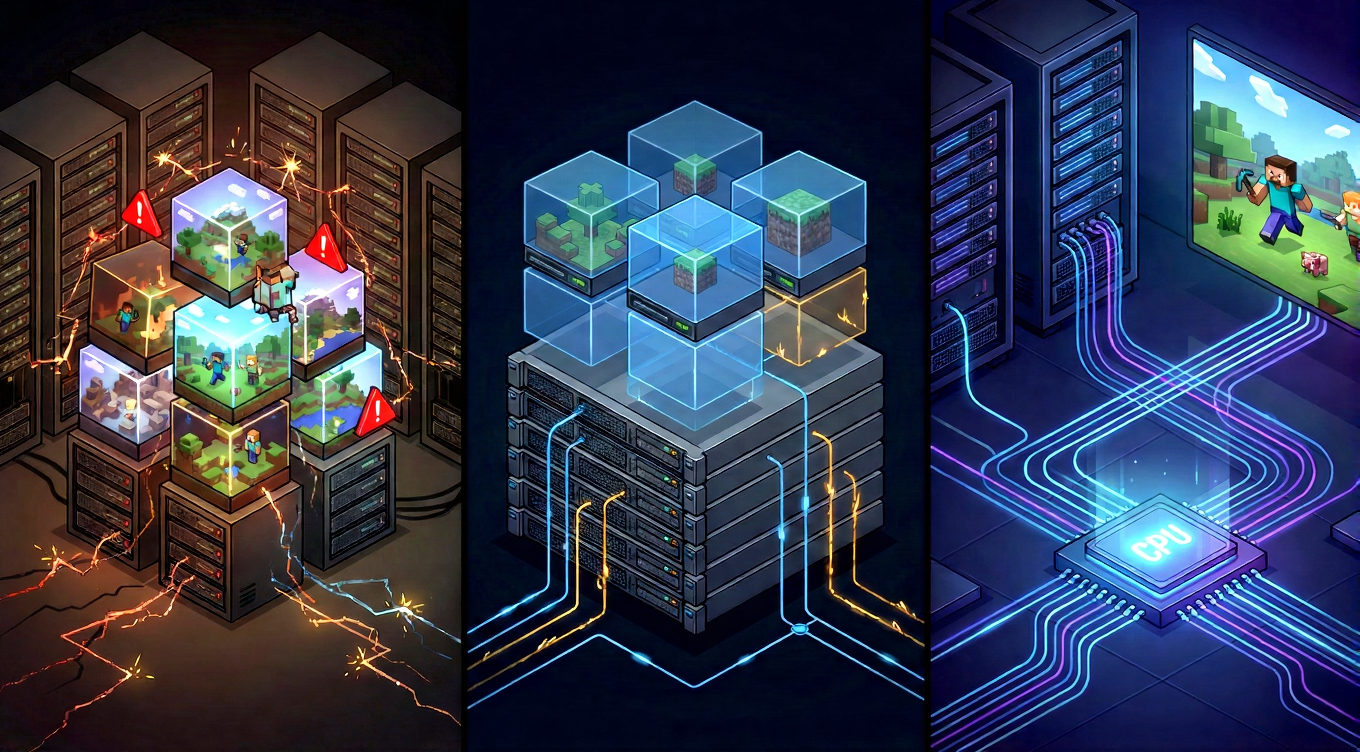
Once server owners understand why hosting quality matters, the next question is obvious: what options actually exist in India?
On the surface, there seem to be many providers. In reality, most fall into a few common categories, each with clear strengths and weaknesses.
Shared Game Hosting
This is the most common option beginners choose. Shared Minecraft hosting usually means your server runs alongside many others on the same machine, with limited CPU allocation.
For small private worlds with friends, this can work. But as soon as player count increases, plugins grow, or events are hosted, performance issues start appearing. TPS drops during peak hours are common, especially in India where many hosts oversell hardware.
Shared hosting is affordable, but it rarely scales well.
International Hosting with “Asia” Locations
Some global providers advertise servers in Singapore or nearby regions and market them to Indian players as “low latency.”
While ping numbers may look acceptable at first, real-world performance often tells a different story. Routing changes, ISP congestion, and lack of Indian peering frequently cause unstable latency. Streams lag, combat feels delayed, and large SMPs suffer during busy hours.
These providers also tend to lack India-focused support, which becomes a problem during outages or attacks.
VPS and Cloud Servers
VPS-based Minecraft hosting is often marketed as “more powerful” because it gives users root access and flexibility.
The downside is that most VPS infrastructure is designed for websites and applications, not real-time game servers. CPU contention, noisy neighbors, and weak DDoS protection can hurt performance badly, especially for public Minecraft servers.
Running Minecraft well on a VPS requires experience, tuning, and strong underlying infrastructure. Without that, it often performs worse than expected.
Dedicated and Game-Optimized Infrastructure
This is where high-performance Minecraft servers usually belong.
Dedicated or game-optimized hosting focuses on:
- Strong single-core CPU performance
- Stable IO for chunk loading and saves
- Network-level DDoS protection
- Support teams that understand game workloads
These setups cost more, but they’re the only reliable choice for large SMPs, creator servers, and public communities in India.
Why DDoS Protection Is Non-Negotiable for Indian Minecraft Servers

One reality many new server owners underestimate is how common attacks are.
Public Minecraft servers attract attention. As player counts grow, so does the likelihood of targeted DDoS attacks, often during events, streams, or peak hours. In India, many hosting providers rely on basic firewall rules or manual mitigation, which simply isn’t enough.
Effective protection must happen before traffic reaches the server. Network-level filtering, automatic mitigation, and experience handling sustained attacks are critical. If protection fails even once, downtime follows, and player trust drops fast.
For creator-led servers, downtime during a stream can permanently damage credibility.
Why CPU Matters More Than RAM for Minecraft
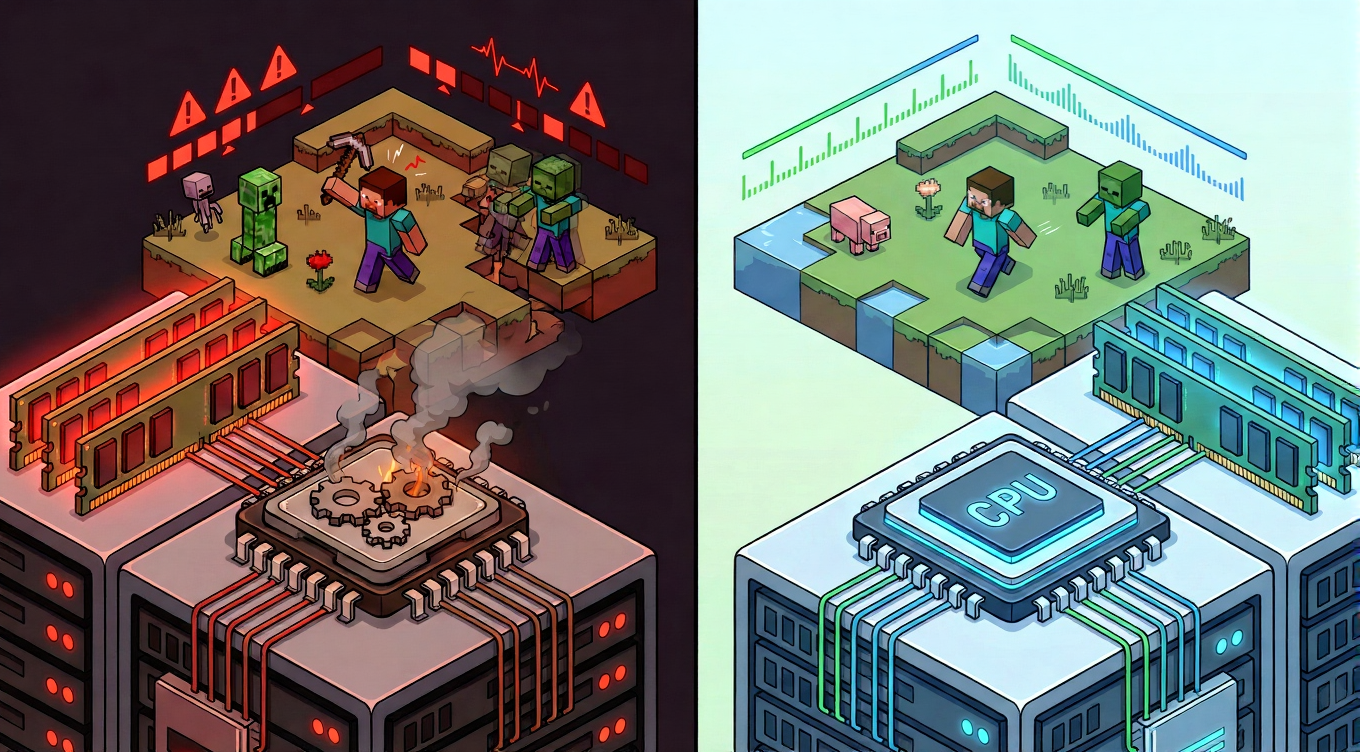
Another common mistake is choosing hosting based only on RAM numbers.
Minecraft performance depends heavily on CPU speed, especially single-core performance. Chunk generation, redstone, entity processing, and plugins all compete for CPU time. Adding more RAM won’t fix lag if the processor can’t keep up.
Many Indian hosts advertise high RAM plans on older or oversold CPUs. These servers look good on paper but struggle in real gameplay.
A smaller plan on modern, fast hardware often outperforms a larger plan on outdated infrastructure.
Support Quality Can Make or Break a Server
When issues happen, support response matters.
Minecraft problems are rarely generic. TPS drops, memory leaks, plugin conflicts, and attack-related lag require experience to diagnose. Hosts that treat Minecraft like a normal application usually fail here.
Good support teams understand:
- JVM behavior under load
- Plugin profiling and optimization
- Network symptoms during attacks
- How to scale servers safely
In India’s growing Minecraft ecosystem, support knowledge is becoming just as important as hardware.
The Hidden Cost of “Good Enough” Hosting
Many servers don’t fail overnight. They slowly decline.
Players tolerate minor lag at first. Then events start failing. Streams feel unstable. New players leave faster than they join. Over time, even well-built communities lose momentum.
For Indian Minecraft servers competing for attention, stability is no longer optional. Players expect smooth gameplay, fast support, and minimal downtime.
The hosting choice you make shapes the future of your server more than any plugin or build ever will.
What Comes Next
Now that we’ve covered:
- Hosting types in India
- Infrastructure and DDoS realities
- Performance fundamentals
The next step is understanding how to evaluate hosting providers objectively, and what questions Indian server owners should ask before choosing one.
In the final part of this guide, we’ll break down:
- A practical checklist for Indian Minecraft hosting
- Common red flags to avoid
- How modern Indian servers are actually being hosted successfully today
How Indian Minecraft Server Owners Should Evaluate Hosting (A Practical Checklist)
After looking at the types of hosting available and where most providers fall short, the next step is knowing how to judge a hosting service properly. This is where many server owners go wrong, because they rely on marketing claims instead of practical indicators.
If you’re running a public SMP, a creator server, or anything beyond a small private world, these are the questions that actually matter.
Is the Infrastructure Built for Gaming, or Just Rebranded Hosting?
A surprising number of “Minecraft hosts” are simply repackaged VPS or shared hosting platforms. They work fine for websites, but gaming workloads expose their limits quickly.
Game-focused infrastructure behaves differently. It prioritizes predictable CPU performance, stable disk IO, and low network jitter. If a provider can’t clearly explain how their infrastructure is optimized for real-time workloads, that’s a red flag.
In India, this distinction matters even more because overselling and hardware reuse are common.
How Does the Provider Handle Real DDoS Attacks?
Every host claims to have DDoS protection. Very few explain how it actually works.
The difference between basic protection and real mitigation is where filtering happens. If malicious traffic reaches the server and is blocked there, it’s already too late. Effective setups stop attacks at the network edge, long before they impact CPU or memory.
For Indian Minecraft servers that run public SMPs or events, this is often the single most important factor. One sustained attack during peak hours can undo months of community growth.
Is Performance Consistent Under Load?
A server that runs smoothly with five players may struggle with fifty.
Ask yourself:
- Does performance remain stable during events?
- Do ticks stay consistent when players explore new chunks?
- Does the server slow down when backups or saves run?
Consistency is a stronger signal than raw benchmarks. Stable performance under pressure is what separates hobby setups from serious infrastructure.
Does Support Understand Minecraft, Not Just Servers?
This is an underrated factor.
Many providers have technically competent teams, but not Minecraft-aware teams. The difference shows when problems appear. Experienced game hosting support can tell the difference between:
- Plugin-caused lag
- JVM memory behavior
- CPU saturation
- Network-level attack symptoms
For Indian server owners, fast and informed responses matter more than generic ticket replies.
How Modern Indian Minecraft Servers Are Actually Being Hosted
If you look closely at successful Indian SMPs and creator-led servers today, a pattern emerges.
They tend to use:
- Game-optimized infrastructure rather than generic VPS setups
- Strong, automated DDoS mitigation instead of reactive firewalls
- Hardware chosen for CPU performance, not just RAM
- Providers with experience handling public traffic and attack patterns
What’s interesting is that many of these servers are not heavily advertised. They run quietly, perform consistently, and only become visible when creators stream or communities grow large.
In several cases, even the hosting provider doesn’t publicly promote who they host. The infrastructure speaks for itself.
This is a sign of maturity in the Indian Minecraft ecosystem. Server owners are prioritizing stability and long-term reliability over flashy marketing.
Red Flags Indian Server Owners Should Avoid
If you’re evaluating hosting options, these warning signs often predict problems later:
- Extremely low pricing paired with very high advertised specs
- No clear explanation of DDoS mitigation
- Vague answers about hardware or CPU models
- Support teams unfamiliar with Minecraft-specific issues
- Claims that focus on “unlimited” features without technical detail
Good hosting doesn’t need exaggeration. It shows up in uptime, smooth gameplay, and player retention.
Putting It All Together
Choosing Minecraft hosting in India is no longer about finding the cheapest plan or the biggest number on a pricing page. It’s about understanding how infrastructure behaves under real conditions: peak traffic, public exposure, and constant player activity.
The servers that last are built on:
- Stable, game-aware infrastructure
- Proper network-level protection
- Consistent performance under load
- Teams that understand Minecraft as a platform, not just a process
In the final section of this guide, we’ll bring everything together with a clear decision framework, explain who should prioritize which type of hosting, and answer the most common questions Indian Minecraft server owners still have before committing.
Who This Guide Is For (And Who It Isn’t)
Not every Minecraft server needs enterprise-level infrastructure. But many server owners only realize this after problems start appearing.
This guide is for:
- Public SMP owners planning long-term growth
- Creator-led servers where performance affects streams and reputation
- Communities hosting events, mods, or large player counts
- Anyone tired of unpredictable lag and downtime
It may not be necessary for:
- Temporary private worlds with a few friends
- Short-term test servers
- Offline or LAN-based gameplay
The key difference is intent. If you expect players to return day after day, infrastructure stops being a background detail and becomes the foundation.
What Indian Minecraft Server Owners Should Prioritize in 2026
Based on how the Indian Minecraft ecosystem is evolving, a few priorities are becoming clear.
First, performance consistency matters more than raw specs. Stable gameplay keeps players engaged longer than impressive numbers that don’t hold up under load.
Second, network-level DDoS protection is no longer optional. As public servers grow, attacks are inevitable. The question isn’t if it will happen, but when.
Third, experience with gaming workloads matters. Providers who actively work with game servers understand issues before they escalate. This saves time, reduces downtime, and protects communities.
Finally, quiet reliability beats loud marketing. The strongest infrastructure often operates in the background, noticed only because things don’t break.
The Long-Term View: Hosting as an Investment
Many Minecraft servers fail not because of bad ideas or weak communities, but because of unstable foundations.
Good hosting doesn’t just prevent crashes. It:
- Improves player retention
- Makes moderation easier
- Reduces admin stress
- Allows creators to focus on content instead of firefighting
In India, where the Minecraft community is expanding rapidly, servers that prioritize infrastructure early are the ones that last.
Frequently Asked Questions (FAQ)
What is the best Minecraft hosting option in India?
The best option depends on your server size and goals. For public SMPs and creator servers, game-optimized infrastructure with strong DDoS protection and low-latency Indian routing performs far better than generic shared or VPS hosting.
Is VPS hosting good for Minecraft servers?
VPS hosting can work for small or private servers, but many VPS platforms are not optimized for real-time gaming. CPU contention, weak DDoS protection, and inconsistent performance can become issues as player counts increase.
Why do Minecraft servers lag even with high RAM?
Minecraft is primarily CPU-bound. Lag often occurs when the processor cannot keep up with game ticks, not because of insufficient memory. Fast single-core performance and stable hardware matter more than high RAM alone.
Do Indian Minecraft servers really need DDoS protection?
Yes. Public Minecraft servers are common targets, especially during events or streams. Without proper network-level mitigation, even a short attack can cause downtime and player loss.
How much ping is acceptable for Indian Minecraft servers?
Consistency matters more than the absolute number. Stable ping under load provides a better experience than fluctuating latency, even if average ping appears low.
Can international hosts be good for Indian players?
Some can work, but routing and ISP peering often cause inconsistent performance. Hosts with India-focused networking generally provide a smoother experience for local players.
Final Thoughts
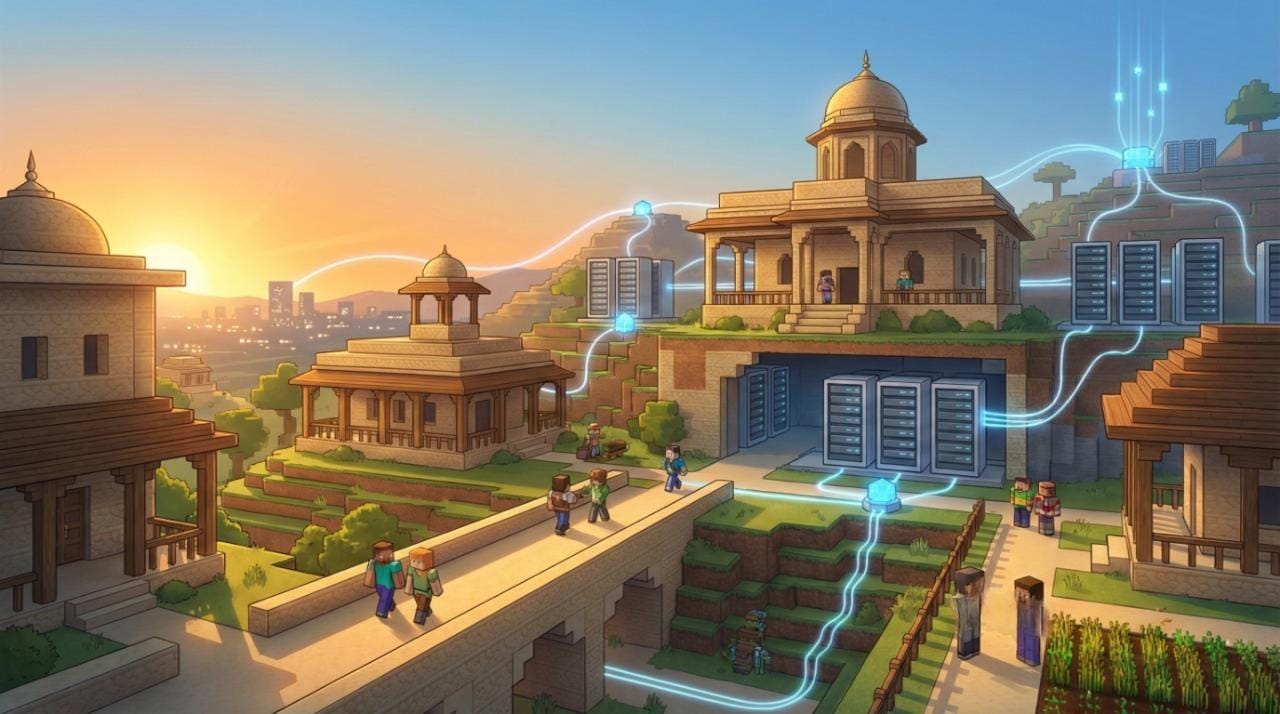
Minecraft hosting in India has reached a turning point. Players expect stability, creators expect reliability, and communities expect servers that can grow without falling apart.
The most successful servers aren’t built on shortcuts. They’re built on infrastructure that quietly handles pressure, absorbs attacks, and stays consistent even when things get busy.
If you approach hosting as a long-term foundation rather than a temporary solution, your server has a far better chance of becoming something that lasts.